

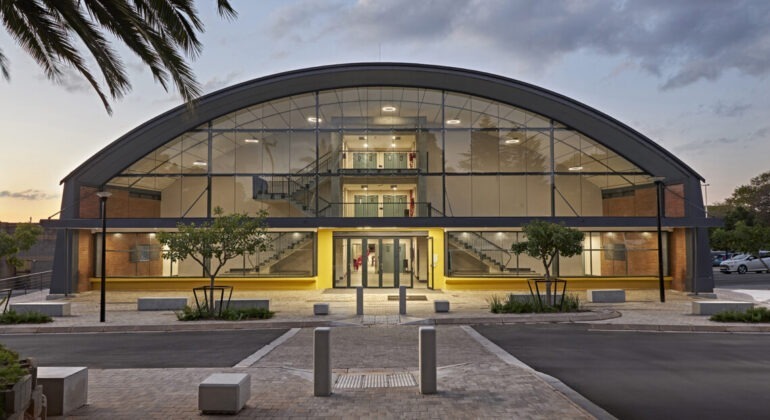
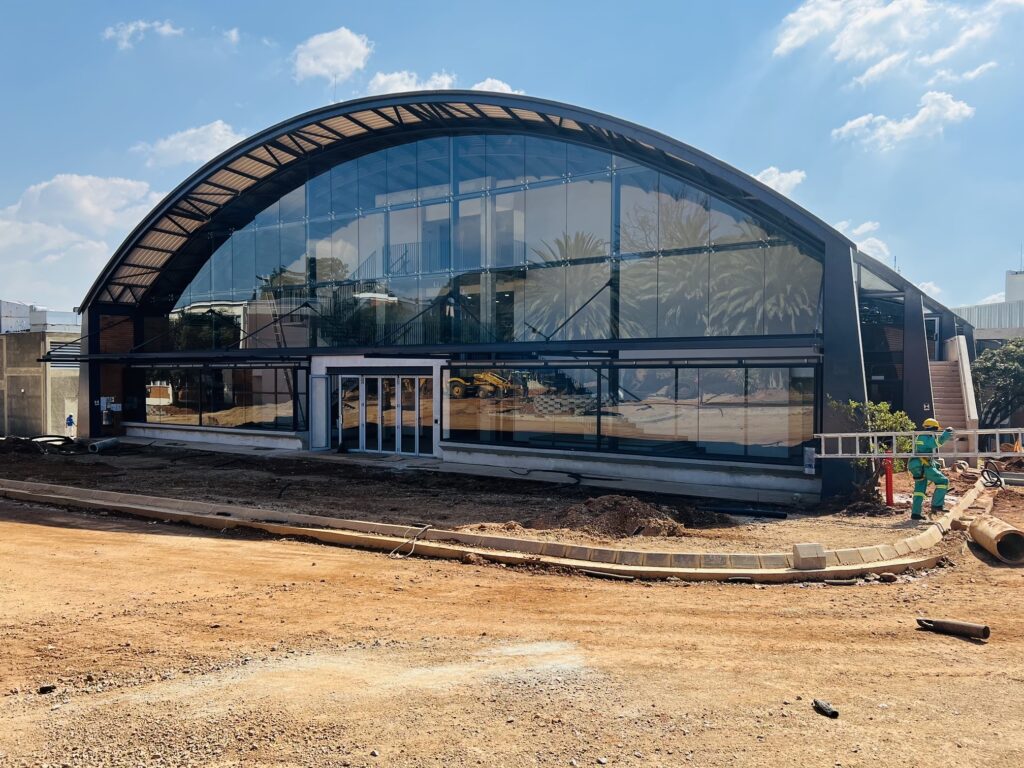
The WITS Flower Hall is located in the south-western corner of the West Campus and is currently being used as a test and examination venue. The Flower Hall was built to house the flower displays of the WITS Agricultural Society. The building was commissioned in the 1969.
The University’s requirement was to free-up academic and office space for various schools in anticipation for increased enrolment of post-graduate student as per Wits 2022 Strategic Vision. Therefore, building an environmentally friendly building with a low carbon footprint without compromising end user comfort was essential.
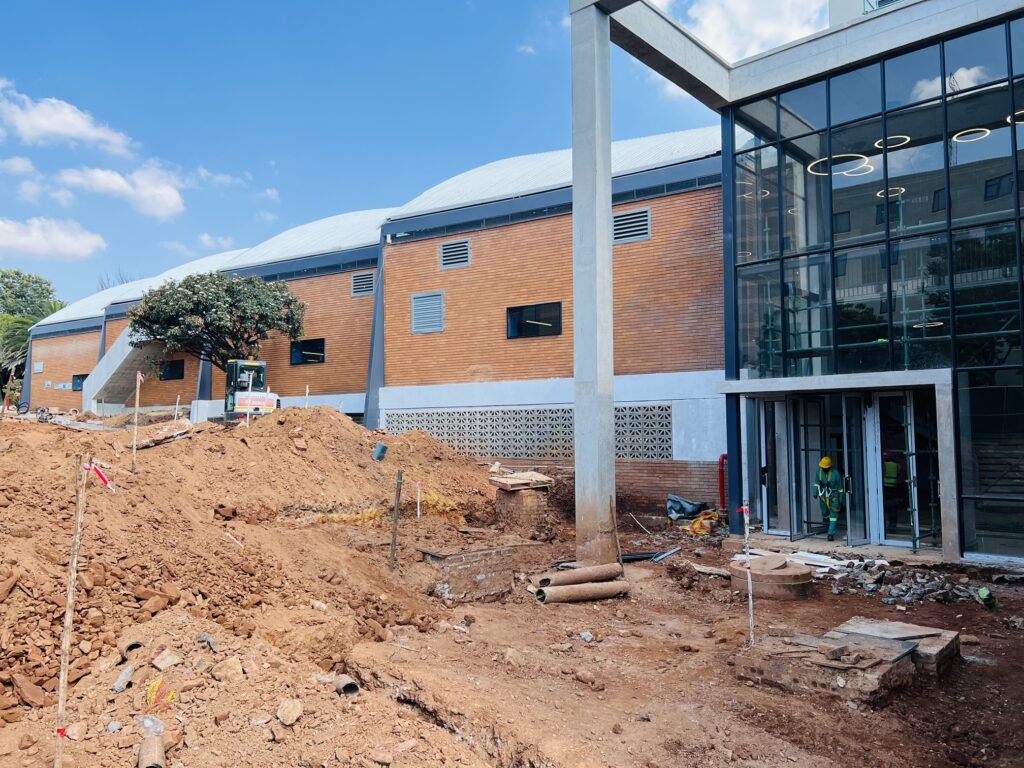
The architects created a three-storey conversion which will initially be used as an examination venue. The mechanical solution was to accommodate dual use by the end-user’s while adhering to the University’s Urban Design Framework. The new first floor will be a full
floor and the second floor will be a partial ‘mezzanine’ floor. A further phase of building will see the conversion of the building for use as Engineering Research Laboratories.
Maninga Engineering, as the appointed mechanical engineers, took the task of reducing the energy consumption of the building by using unconventional methods. The objective set out was to:
- Provide thermal comfort for the occupants
- Reduce operating costs
- Ensure energy efficiency
HVAC System
The Flower Hall has an adaptable system:
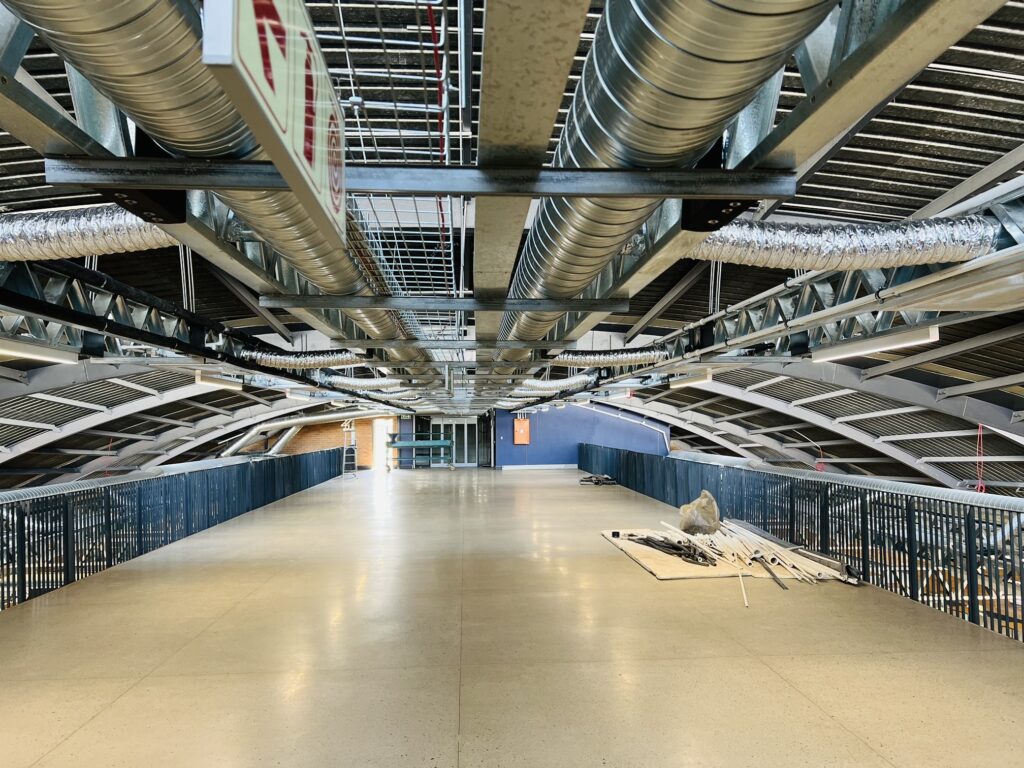
- Active Chilled Beams
- Air Cooled Chiller
- Air Handling Units (with EC plug fans – for variable fan drive)
The chilled beam method is new to the continent and is in its early adoption phase. There are few installations noted in South Africa. The Flower Hall installation is the biggest installations in Africa, with 138 active chilled beams installed. Chilled beam cooling has a number of advantages:
- Reduced ceiling void height (decreases required space by 50% ).
- The system requires 30–50% lower air flow allowing reduced plant sizes and variable
operation, allowing increased plant e ciency. - The airflow from the chilled beam is lower than the conventional di user type;
therefore reducing the feeling of draft. - Adaptable to room orientation and usage.
- Little noise levels.
Chilled beams reduce maintenance compared to the conventional variable air volume (VAV) systems, since the chilled beam only requires an annual dusting of the filter. Low maintenance and operating cost: Up to 50% savings compared to conventional VAV system can be achieved.
Controlling the internal environment of the building without using conventional air makes this project unique. An air-cooled chiller is located on roof of the building. The unit is used to heat up and cool the water which circulates in the air handling unit.
The project embraces passive design principles, such as effective insulation, shading strategies, and optimized glazing, which work in synergy with the HVAC system to minimize cooling loads and enhance energy efficiency. This holistic approach reflects our dedication to
achieving a balance between architectural design, thermal comfort, and sustainable practices. Notably, the Flower Hall project aligns with global warming reduction e orts by significantly reducing greenhouse gas emissions associated with building operation. The active chilled beam system’s energy efficiency and lower carbon footprint contribute to the University’s sustainability goals and the broader mission to combat climate change.
In conclusion, the Flower Hall project showcases our expertise in delivering an energy efficient, comfortable, and environmentally friendly HVAC system. By integrating active chilled beams, optimizing passive design elements, and emphasizing occupant well-being, we have successfully transformed the building into a state-of-the-art Engineering Analytical Laboratory while minimizing its impact on the environment. It is an honor to have been a part of this project, and we are proud of the innovative solutions we have implemented to create a sustainable future for the University and its occupants.